
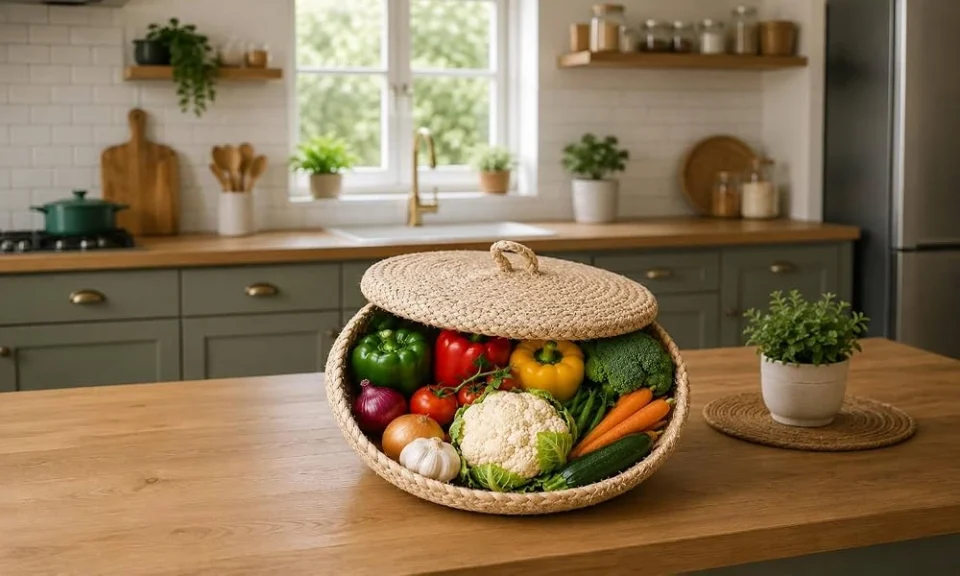
Most people assume produce lasts longer in a sealed container, when the opposite is often true. Vegetables continue respiring after harvest, releasing moisture and ethylene gas, and trapping them in an airtight space accelerates spoilage rather than slowing it. A well-designed vege basket solves this by allowing airflow around the produce while still keeping it contained and easy to handle, which is why ventilated storage outperforms sealed tubs for anything still ripening.
Why Airflow Matters More Than Sealing
Fresh produce keeps respiring after it leaves the field, drawing in oxygen and releasing carbon dioxide, moisture and ethylene as by-products. Without ventilation, that moisture condenses on the surface of the vegetables, creating the damp conditions that mould and bacteria need to establish. Perforated storage lets excess moisture escape while still shielding contents from dust and handling damage, extending usable shelf life considerably.
Common Materials Used in Produce Baskets
High-density polyethylene and polypropylene dominate commercial produce storage because both resist cracking under repeated stacking and washing, tolerate the temperature swings of cold rooms, and do not absorb odours from previous contents. Food-grade certification matters here, since baskets in direct contact with produce need to meet hygiene standards that decorative or general-purpose plastics are not designed to satisfy. UV-stabilised versions are worth considering for anything stored or transported outdoors, since untreated plastic can become brittle after prolonged sun exposure.
Design Features That Protect Produce
Rounded internal corners reduce bruising on delicate items like tomatoes and leafy greens, while reinforced rims prevent the basket from deforming when stacked several high in a cold room or delivery van. Slotted or lattice bases allow drainage if produce is rinsed before storage, stopping water from pooling at the bottom and softening whatever sits closest to the base. Recessed handles built into the side walls also reduce the risk of a basket slipping from tired hands during a long shift.
Stackability and Space Efficiency in Storage
Nesting or stacking designs make a measurable difference in cold room and delivery van capacity, since baskets that interlock securely allow taller, more stable stacks without crushing the produce underneath. A stackable industrial storage basket also speeds up loading and unloading, since staff can move several units at once rather than handling each one individually.
Choosing the Right Size for Your Volume
Undersized baskets lead to overfilling, which crushes produce near the bottom and defeats the purpose of ventilated storage in the first place. Oversized baskets waste cold room space and make individual units heavier and more awkward to carry. Matching basket capacity to typical daily volume, with some allowance for peak periods, keeps handling efficient without compromising produce quality. It also helps to think about which items are heaviest, since a basket sized for leafy greens may buckle under a full load of root vegetables.
Cleaning and Maintaining Produce Baskets
Regular washing with food-safe detergent prevents residue buildup in the perforations, which can otherwise harbour bacteria even when the basket looks clean. Baskets should be fully dried before restacking, since trapped moisture between nested units creates a breeding ground for mould that then transfers to the next batch of produce placed inside. A brief visual inspection during each wash also catches hairline cracks early, before a stressed basket fails under load.
Comparing Baskets to Crates and Sacks
Sacks offer no structural protection and concentrate weight on whatever sits at the bottom, while rigid crates without ventilation slots trap moisture in the same way sealed containers do. Ventilated baskets strike a balance, offering enough rigidity to prevent crushing while allowing the airflow that loose sacks provide but without the handling difficulties sacks bring to a busy kitchen or warehouse. Cardboard boxes fall short too, since they soften quickly once damp and cannot be washed and reused the way a properly made plastic basket can.
Where These Baskets Fit in a Commercial Kitchen
Beyond storage, baskets double as transport containers between delivery, cold room and prep area, reducing the number of times produce needs to be handled and therefore the risk of bruising or contamination. Colour-coding by produce type or supplier is a simple addition that speeds up stock rotation and helps kitchen staff spot ageing stock before it becomes unusable.
Cost Considerations and Value Over Time
A sturdier basket costs more upfront but typically outlasts several cycles of cheaper alternatives that crack under repeated stacking or repeated trips through an industrial washer. Factoring in reduced spoilage from better ventilation alongside the basket’s working life gives a far more accurate picture of value than comparing unit price alone, and it usually favours the better-built option over the cheapest one on the shelf, especially once replacement frequency is added into the comparison.
Choosing the Right Basket for Your Operation
The right choice depends on volume, storage environment and how often the basket moves between locations, so it is worth matching material, ventilation and size to actual daily use rather than buying on price alone. A properly specified vege basket pays for itself quickly through reduced spoilage and faster, safer handling across a busy kitchen or storage operation.
